

A payment recorded is not necessarily revenue banked. For government transport leaders, the distance between those two events is a financial governance issue.
Where collections move through municipalities, agents, payment channels and banks, the accountable institution may carry responsibility without direct control over every step. Periodic reconciliation can identify discrepancies, but often only after they have accumulated, delaying investigation and increasing the effort required to establish an accurate revenue position.
Our view at RIMS is that reconciliation should operate continuously within the revenue flow, not merely verify the outcome after the fact.
Government leaders need timely, evidence-based answers to three questions: What was collected? What reached the bank? What remains unresolved?
Gauteng’s Department of Roads and Transport provides a practical example. RIMS connected payment, banking and operational data through standardised references and transaction-level traceability. In a Quarter 4 2025/26 operational sample, the published case study reports 99.54% average cash-up reconciliation, with 100% of cash-ups captured, completed and signed off.
The graphic below illustrates another important aspect of reconciliation: identifying the revenue attributable to a department within a shared banking environment. Comparing 2024/25 and 2025/26, it shows how motor vehicle licensing revenue was allocated across collecting entities, providing greater visibility of the funds attributable to the Department.
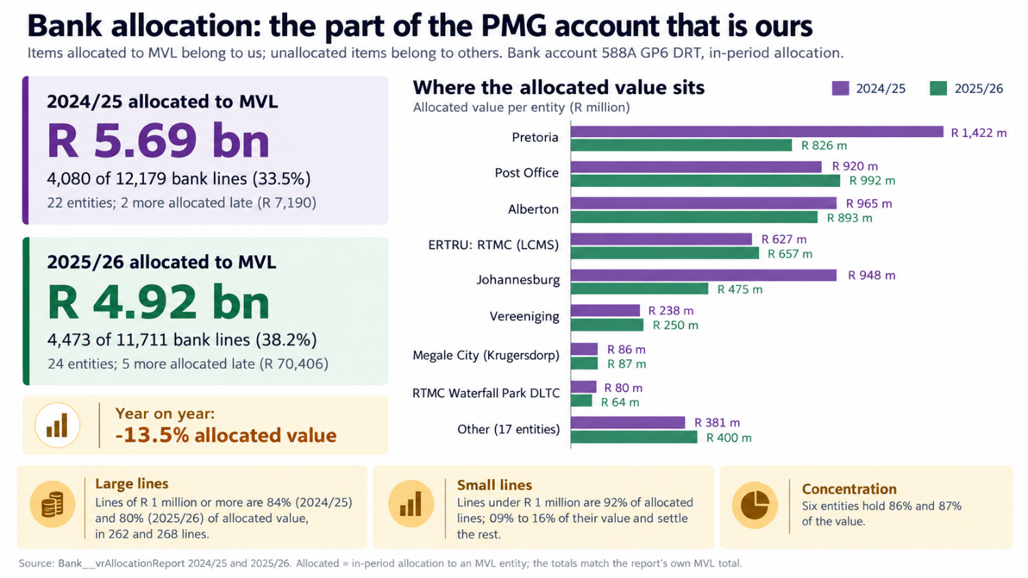
Figure 1: Transaction-level allocation identifies departmental revenue within a shared banking environment, strengthening financial visibility and accountability.
These results illustrate the value of embedding reconciliation into daily operations. Connected records and visible exceptions enable earlier investigation, more reliable reporting and stronger evidence for financial oversight.
But reconciliation and banking control serve different purposes. Reconciliation verifies receipts and allocations; clear banking authority establishes institutional control over where funds are deposited. Both are necessary for effective revenue governance.